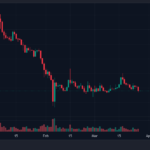
- Gold ETFs recorded roughly US$11 billion in outflows within the first three weeks of March, led by SPDR Gold Shares’ report US$7 billion (AU$10.07 billion) month-to-month redemption.
- JPMorgan analyst Nikolaos Panigirtzoglou famous that gold’s market liquidity has “deteriorated beneath bitcoin’s for the primary time,” marking a historic shift in relative market depth.
- Gold has fallen roughly 15% from its January report close to US$5,500 per ounce, whereas Bitcoin stabilised round US$69,000 after an preliminary drawdown when the Iran battle started on Feb. 28.
Bitcoin (BTC) held up higher than gold and silver throughout the Iran battle, as heavy outflows from valuable metals funds contrasted with continued inflows into spot Bitcoin ETFs and a shift in market correlations.
In a March 26 report, JPMorgan analyst Nikolaos Panigirtzoglou stated gold market liquidity had fallen beneath Bitcoin’s for the primary time.
The financial institution linked the selloff in metals to profit-taking in crowded trades, larger rates of interest tied to war-driven inflation, and a stronger U.S. greenback.
Gold has fallen about 15% from a January excessive close to US$5,500 (AU$8,415) per ounce to about US$4,450 (AU$6,809), marking its steepest weekly drop in additional than 14 years. Silver dropped from almost US$120 (AU$184) per ounce to US$69 (AU$106).
Furthermore, Gold ETFs misplaced about US$11 billion (AU$16.83 billion) within the first three weeks of March. SPDR Gold Shares alone noticed US$7 billion (AU$10.71 billion) in month-to-month outflows, together with US$3 billion (AU$4.59 billion) on March 6, its greatest one-day withdrawal in two years.
iShares Gold Belief misplaced US$3.77 billion (AU$5.77 billion), whereas silver ETF inflows constructed up since mid-2025 had been absolutely erased.
Associated: Analyst Says Bitcoin Eyes $80K as Key Level Faces Breakout Pressure
ETF Flows Inform the Story
Bitcoin ETFs moved the opposite approach, drawing about US$2.5 billion (AU$3.83 billion) in March. BlackRock’s IBIT introduced in US$1.1 billion (AU$1.68 billion) between March 2 and 4 and posted seven straight influx days from March 9 to 17, totaling US$1.47 billion (AU$2.25 billion).
Bitcoin initially dropped when the Iran conflict started on Feb. 28, falling from about US$66,000 (AU$100,980) to US$63,000 (AU$96,390), wiping roughly US$128 billion (AU$195.84 billion) in market worth.
BTC then rebounded to US$73,156 (AU$111,929) by March 5. Over the identical interval, the BTC-gold correlation moved from -0.49 to +0.16, which JPMorgan referred to as a statistically vital regime change.
Promoting by long-term Bitcoin holders additionally eased. Their 30-day internet place change improved from -243,737 BTC on Feb. 5 to -31,967 BTC by March 1, an 87% discount.
Associated: 21Shares Bets on Active ETFs as Crypto Investing Enters Its Next Phase
Even so, JPMorgan described the transfer as “safe-haven-like demand” slightly than proof Bitcoin has develop into a full secure haven. That warning was strengthened by a US$129 million (AU$197 million) one-day ETF outflow after the FOMC on March 18, displaying Bitcoin stays uncovered to broader macro shocks.
The put up JPMorgan Says Bitcoin Holds Strong While Gold And Silver Lose Their Shine appeared first on Crypto News Australia.